


Moissanite vs Diamond Key Differences Cost Durability and Why Moissanite Shines

Updated: Aug 11
A gemstone can look brilliant in the case, beautiful on the hand, and still leave one big question unanswered: is the higher diamond price really worth it? For jewelry enthusiasts, the comparison between diamond and moissanite is one of the most interesting in the modern fine jewelry world.
Both stones can be stunning. Both can be worn every day. Both can sit beautifully in engagement rings, earrings, pendants, and anniversary pieces. Yet they differ in ways that matter, especially when it comes to sparkle, long-term wear, cost, and ethics.
Moissanite has become one of the most popular Diamond alternatives because it offers impressive beauty at a much lower price. It is not a fake diamond. It is its own gemstone, with its own optical personality, strengths, and buying considerations.
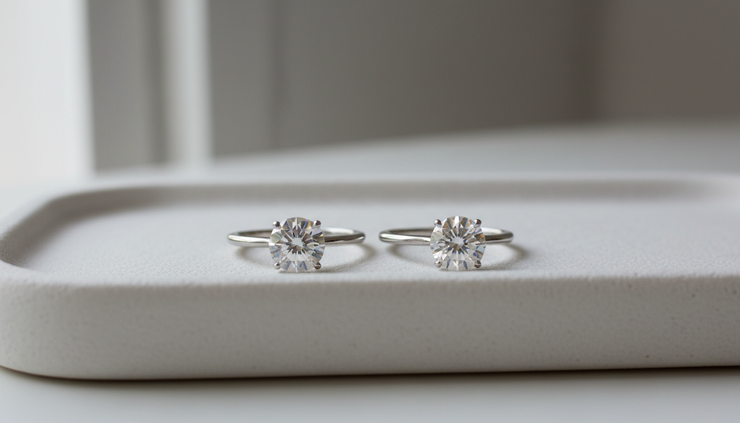
What moissanite and diamonds are made of
Diamonds are made of carbon. Natural diamonds form deep within the Earth under intense heat and pressure over long periods of time. Lab-grown diamonds are also carbon and have the same chemical composition as mined diamonds, but they are created in controlled laboratory settings.
Moissanite is made of silicon carbide. Natural moissanite is extremely rare, so the stones used in jewelry today are lab-created. That matters for both price and ethics. Because it can be grown in a controlled process, buyers get a consistent, durable gemstone without the same mining concerns tied to many natural stones.
The two gemstones can look similar at first glance, especially in classic white round cuts. Yet under different lighting, they reveal different personalities.
A diamond is prized for its crisp white brilliance and classic fire. Moissanite is known for bold sparkle and colorful flashes, especially in larger stones or elongated cuts.
How appearance differs in real life
The biggest visible difference comes down to how each stone handles light.
Diamonds have a balance of brilliance, fire, and scintillation. Brilliance is the white light return. Fire is the rainbow color effect. Scintillation is the sparkle that appears when the stone, light, or viewer moves.
Moissanite has more fire than diamond. In plain terms, it often throws stronger rainbow flashes. Some people love this lively look. Others prefer the cooler, sharper sparkle of diamond.
Sparkle and fire
A diamond’s sparkle often looks clean, crisp, and refined. High-quality diamonds can appear bright in many lighting conditions, from daylight to candlelight.
Moissanite can look more dramatic. Under bright store lights, sunlight, or spot lighting, it may show vivid rainbow flashes. This can be a major selling point for anyone who prefers a gemstone that catches the eye.
In smaller sizes, the difference can be subtle. In larger center stones, especially above one carat equivalent, moissanite’s rainbow fire becomes easier to spot.
Color and clarity
Diamonds are graded on a color scale that ranges from colorless to light yellow or brown. Colorless diamonds usually cost more, all else being equal.
Moissanite is commonly sold in colorless or near-colorless grades. Older moissanite could have a faint yellow or green tint, but modern stones are often much whiter. In some lighting, certain moissanites may still show a warmer undertone, especially in larger sizes.
Clarity also works differently. Diamonds can have natural inclusions because they form under geological conditions. Lab-grown diamonds can have inclusions too. Moissanite is lab-created for jewelry use, so it is often sold with very good clarity.
Cut and shape
Cut quality matters for both stones. A well-cut stone will look brighter, cleaner, and more balanced. A poorly cut stone can look dull, even if the material itself is valuable.
Popular shapes for both include:
Round brilliant
Oval
Cushion
Emerald
Pear
Radiant
Princess
Round moissanite often looks very diamond-like. Step cuts, such as emerald cuts, can make differences more visible because they emphasize clarity and broad flashes rather than glittering sparkle.

Durability and everyday wear
Durability is one of the strongest reasons both gemstones work well in daily jewelry.
Diamonds score a 10 on the Mohs hardness scale, making them the hardest natural material used in jewelry. This means they resist scratching extremely well. That is one reason diamonds have long been favored for engagement rings.
Moissanite scores about 9.25 on the Mohs scale. That is still very hard, harder than sapphire and ruby, and far harder than many other gemstones used in rings. For daily wear, it performs very well.
Hardness is not the only factor. Toughness and care also matter. A diamond can still chip if struck at the wrong angle, especially near a sharp point or thin girdle. Moissanite is also durable, but it should still be protected from hard knocks.
For rings worn every day, settings play a major role. A secure prong setting, bezel setting, or low-profile design can protect the stone better than a high, exposed mount. This matters for both diamond and moissanite.
Cost is where the difference gets dramatic
Price is often the deciding factor. Diamonds can be expensive because their cost reflects a mix of rarity, grading, market demand, size, cut quality, color, clarity, and origin.
Moissanite usually costs much less than a diamond of similar visual size. The savings can be significant, especially for larger center stones. This allows buyers to choose a bigger stone, a higher-quality setting, or matching jewelry pieces without pushing the budget as far.
Here is a simple comparison of the main buying factors.
Feature | Diamond | Moissanite |
Composition | Carbon | Silicon carbide |
Hardness | 10 on Mohs scale | About 9.25 on Mohs scale |
Sparkle | Crisp white brilliance with balanced fire | Strong brilliance with more rainbow fire |
Typical origin | Natural mined or lab-grown | Lab-created for jewelry use |
Cost | Usually much higher | Usually much lower |
Ethics | Depends on source and supply chain | Often easier to trace due to lab creation |
Best for | Traditional value, classic appeal, heirloom buying | Value, size, sparkle, ethical preference |
The lower price of moissanite does not mean low quality. It means the gemstone is more available to create and sell. For many buyers, that is a benefit, not a drawback.
A person shopping for a ring may prefer a moissanite center stone and use the savings for a platinum setting, custom design, wedding bands, or future jewelry care. The total piece can still feel luxurious without relying on the diamond price tag.
Why testing matters before you buy or sell
Visual inspection alone can be misleading. A bright moissanite and a well-cut diamond can look very similar without magnification or proper tools. This is why a simple tester can be useful for collectors, casual buyers, and anyone who shops secondhand.
Many affordable testers are available on Amazon. The key is choosing the right type.
A basic diamond tester often measures thermal conductivity. Since diamond conducts heat very well, this test helps separate diamonds from many simulants such as glass or cubic zirconia. The catch is that moissanite also conducts heat well, so some basic thermal testers may identify moissanite as diamond.
For distinguishing diamond from moissanite, look for a tester that specifically says it can detect both diamond and moissanite. Many of these use additional electrical conductivity testing because moissanite and diamond respond differently.
A simple tester can help in several ways:
It gives a quick first check when sorting inherited or secondhand jewelry.
It helps identify common simulants before paying for an appraisal.
It adds confidence when buying from marketplaces, estate sales, or private sellers.
It can prevent confusion between similar-looking stones in a personal collection.
A tester is not a replacement for a professional grading report or jeweler’s evaluation. It is a practical screening tool. For expensive purchases, especially natural diamonds, a report from a respected gemological lab still matters.
A tester is useful because it answers the first question quickly: is this stone likely diamond, moissanite, or something else?

Ethical considerations make moissanite even more appealing
Ethics have become a major part of jewelry buying. Many people want beauty without uncertainty about mining practices, labor conditions, or environmental impact.
Natural diamonds can be responsibly sourced, and many jewelers work hard to document their supply chains. Lab-grown diamonds can also reduce some concerns connected to mining. Still, the diamond market can be complex, and origin may not always be simple for older or secondhand stones.
Moissanite offers a clearer path for many buyers because it is lab-created for the jewelry market. Its production does not require diamond mining, and its price does not depend on the same rarity-driven structure. That makes it appealing for anyone who values transparency, affordability, and long-term wear.
This is one reason moissanite has moved beyond being seen as a substitute. It has become a confident choice on its own. It delivers beauty, durability, and sparkle while leaving more room in the budget.
Cleaning and maintenance protect the sparkle
Even the most brilliant stone will look dull when it is covered in lotion, soap film, skin oils, dust, or residue. Diamonds and moissanite both attract buildup through normal wear, especially in rings.
Regular cleaning helps maintain sparkle and protects the jewelry as a whole. The stone may be durable, but the setting, prongs, and metal still need care.
For routine cleaning at home:
Fill a small bowl with warm water and a few drops of mild dish soap.
Let the jewelry soak for several minutes.
Use a soft toothbrush to clean around the stone, under the setting, and near the prongs.
Rinse carefully with clean water.
Dry with a lint-free cloth.
Always plug the sink drain or use a bowl. Small stones and delicate rings can slip easily.
Avoid harsh chemicals, bleach, and abrasive cleaners. They may not damage the diamond or moissanite, but they can harm certain metals, finishes, or accent stones. Ultrasonic cleaners can be safe for some pieces, but they are not ideal for every setting. If a ring has loose stones, damaged prongs, treated gems, or antique details, ask a jeweler first.
Professional inspections are also smart. A jeweler can check prongs, tighten stones, polish metal, and spot wear before it becomes a repair problem. For frequently worn rings, an inspection once or twice a year is a sensible habit.

When a diamond still makes sense
Diamonds still hold a powerful place in fine jewelry. They have tradition, cultural weight, and a grading system that many buyers understand. For some, a diamond carries emotional meaning because of family history, heirloom value, or personal preference.
A diamond may be the better fit when:
The buyer wants a traditional gemstone with long-standing cultural symbolism.
Resale or trade-in options matter, even though resale value can vary.
The piece is intended as a classic heirloom.
The buyer prefers crisp brilliance over rainbow fire.
A certified natural or lab-grown diamond is part of the desired story.
The best choice is not always the most expensive one. It is the one that matches the wearer’s taste, values, and lifestyle.
Why moissanite shines as a smart alternative
Moissanite stands out because it gives so much beauty for the price. It is durable enough for daily wear, bright enough to feel special, and accessible enough to make larger or more detailed designs possible.
Its value is especially clear in engagement rings and statement pieces. A buyer can choose a larger center stone without sacrificing the setting. They can also select side stones, custom metalwork, or matching bands while staying within a reasonable budget.
The ethical appeal strengthens the case. Since jewelry-grade moissanite is lab-created, it avoids many of the concerns tied to mined gemstones. For people who want sparkle with fewer questions about sourcing, that matters.
It also has its own look. The extra fire, the crisp brightness, and the wide range of cuts make it more than a diamond stand-in. It is a gemstone with confidence.
The best choice depends on what matters most
Diamond and moissanite both deserve a place in fine jewelry. Diamonds offer tradition, unmatched hardness, and a classic sparkle that many people will always love. Moissanite offers exceptional value, strong durability, dramatic brilliance, and a more accessible path to ethical buying.
For anyone comparing the two, the smartest approach is simple: view both stones in different lighting, compare them in the size and shape you actually want, and think beyond the center stone. Consider the setting, long-term care, cleaning routine, and whether a simple Amazon tester could help verify pieces in your collection.
A beautiful piece of jewelry should be worn, cared for, and enjoyed. If moissanite gives the look, value, and peace of mind you want, it is not a compromise. It is a bright, practical, and genuinely beautiful choice.
Comments